kokeshi Interview for R.E.A (Elros Alcarín) in collaboration with NIPPONGAKU.
Some bands can be understood almost immediately after listening to a few songs and reading a short introduction.
kokeshi, however, are different.
Since forming in 2017, kokeshi have often been described as a band that blends black metal, screamo, shoegaze and horror aesthetics. Yet the more time one spends with their songs, music videos and visual expression, the more themes begin to emerge that cannot be explained through those labels alone. Identity, loss, wounds that never disappear, the changes that shape who we are and the tension between the self we show and the self we keep hidden.
Ahead of their Madrid show as part of their European tour, we wanted to speak with kokeshi from a slightly different angle.
Not about genres or labels, but about the ideas, images and emotions that seem to shape the world of kokeshi.
After performing not only in Japan but also overseas, is there anything you have rediscovered about the appeal or characteristics of your music through the audience’s reactions?
Nana: While performing overseas, one thing I have felt again is that even when the language does not get across, the world we want to express can still be communicated.
Although we work within an intense genre, we do not use stage banter or performances designed to hype up the audience in a conventional way. Because of that, some people quietly take in the sound and performance, while others release their emotions through moshing. Each person receives the work in their own way.
I once again felt that the greatest appeal of our live shows is that the audience can experience the work itself as a complete performance.
In kokeshi’s videos and lyrics, everyday spaces such as bedrooms, houses and kitchens appear, yet a sense of unease or strangeness sometimes hides within them. What draws you to the eeriness that can exist inside familiar things?
Adel: I think the sense of loneliness that comes from being left behind in a deep forest or surrounded by vast nature expresses a certain beauty or emptiness more than fear.
The closer a place is to our daily life, the more it should feel safe, and the more fear people feel when something strange happens there.
Under the bed. A closet left slightly open. A knife that should be in the kitchen appearing in a shrine. When something is in a place where it should not be, people feel discomfort.
KOKESHI incorporates both kinds of expression depending on the song.
kokeshi’s music seems to show more interest in people who are in the middle of change than in people who have already found an answer. What attracts you to that process?
Adel: I think it is fine for each listener to have their own story for each song. There are songs where the sound seems to purify sickly lyrics or vocals, like the fantasies of a mad person or someone who cannot blend into this planet or society.
If you try to read too deeply into the message or understand the songs too rationally, you might end up getting sick, so please be careful.
In the past, Nana spoke about difficult experiences, hatred and the will to keep living in the present. Is writing lyrics a way for you to understand emotions, or a way to learn how to live with them?
Nana: For me, writing lyrics is not so much about understanding my own emotions. It is more an act of placing into words the emotions and landscapes that exist within each work. I believe that this can make the work feel more real.
In the lyrics, I often express various negative emotions seen from different angles, or replace those emotions with words that carry a different meaning. I try to write lyrics that allow people to imagine, through the sound being played, the scenes of each work’s story.
Masks, inner contradictions and identities that fall apart appear repeatedly in kokeshi’s lyrics. Do you think people spend much of their lives searching for their true self?
Nana: We live in an era overflowing with things and information. If we look away, it becomes easy to lose sight of what we truly want to do or what our essence really is.
I think it is necessary to stop once along the way and confirm that essence while facing ourselves, whether by questioning ourselves directly or by observing ourselves from a wider perspective.
In “Rokudō no Tsuji”, themes such as loss, hatred, forgiveness and destruction appear repeatedly. However, the song does not seem to try to offer a clear answer or conclusion. Are you more interested in questions than answers?
Adel: That song takes place afterward. It is a story after a tragedy. I think it sings in a fragile way about things that have been broken, or things that one has broken oneself.
Rather than whether answers or questions are important, it is about the emotional change of one person. The exposed parts. Burning anger appearing as cold emptiness. The way expressions change from scene to scene.

In the West, wounds are often spoken of as something that should be overcome or left in the past. In Japan, however, there is the concept of kintsugi, where cracks are repaired while their traces remain as part of the object’s history. When reading kokeshi’s lyrics, we felt a certain connection with that way of facing scars. Do you also feel close to that idea?
Nana: I believe it is not possible to act as if the wounds or pain of the human heart never existed.
Once a wound is made, if it is not repaired, it gradually begins to corrode. That corrosion can become resentment, consume one’s own heart and even invade other hearts.
It is not about denying the feeling of resentment, but about facing it. I believe that by doing so, it can be accepted as a part of oneself. That is why the feeling of resentment appears naturally in my lyrics.
kokeshis music contains both moments of extreme intensity and moments so delicate they feel as if they could break. For you, what is the relationship between these two opposite emotions?
Adel: In kokeshi’s philosophy and in the foundation of our music, there is a very important theme: stillness and movement.
At times, this changes and is expressed as destruction and purification, life and death, among other ideas. I think the ideal would be to create songs while always being able to perceive things from the opposite point of view as well.
In terms of sound, the range between small sounds and large sounds, the nuances and the dynamics are what KOKESHI care about most when performing.
Nana: Moments so delicate that they seem about to break make the intense scene that comes next stand out even more. In the same way, a delicate phrase after an intense moment makes the afterglow of that intensity expand.
I think these opposite expressions enrich each other.
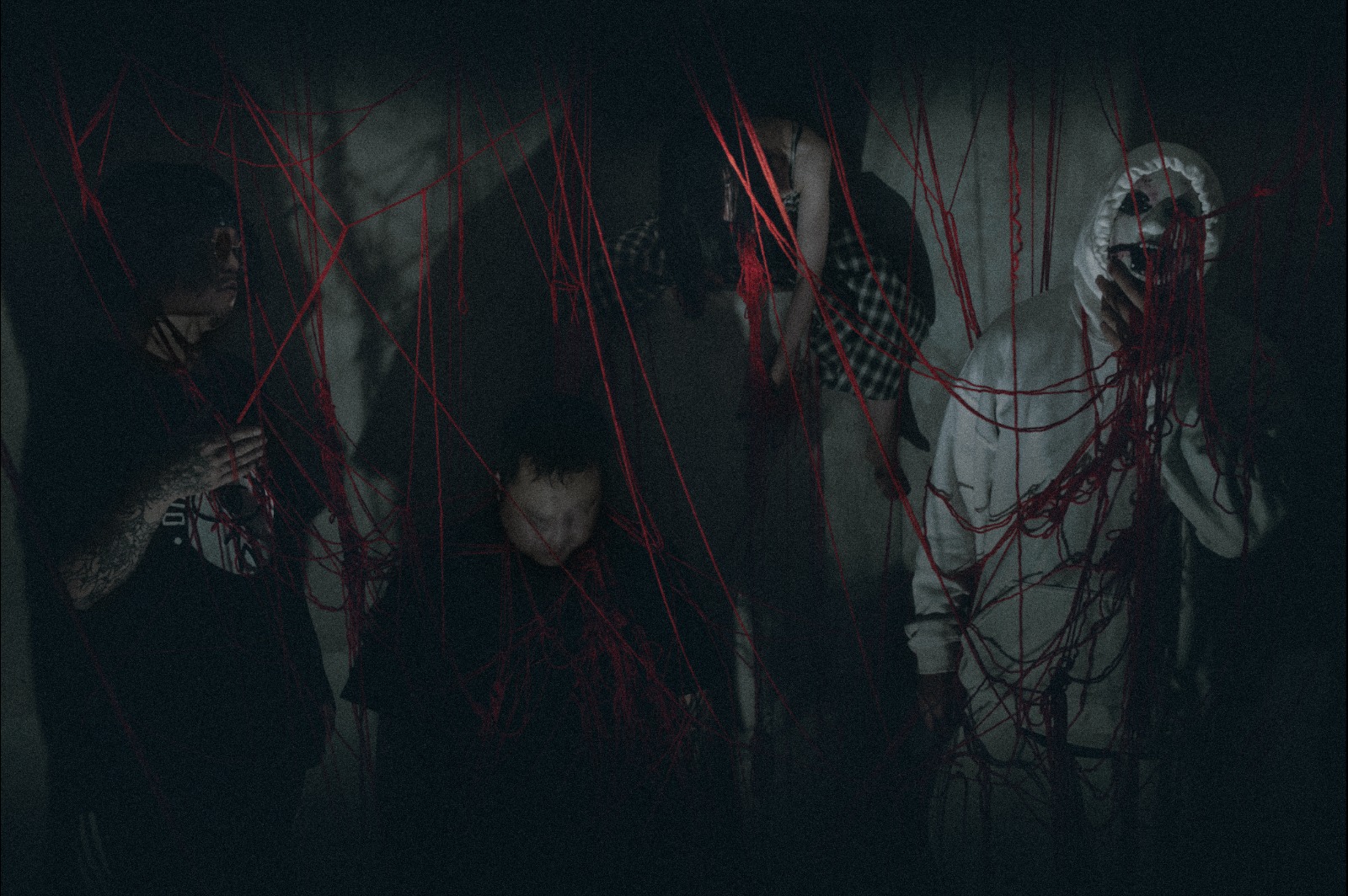
In kokeshi’s visual expression, recurring images appear, such as the sea, red threads, fragmented bodies and shadowlike figures. Are there symbols or motifs that naturally enter your work, even without you consciously intending them to?
Adel: I think that, even without doing it consciously, we tend to treat places where humans once existed in a symbolic way, such as ruins, abandoned houses or cities swallowed by deep forests.
For example, even in a song with the image of someone drowning in the open sea, the visual we create might be set in the bathroom of a house. By creating videos or photographs that contrast with the world of the sound and lyrics, we believe the song gains more depth and a wider range of expression.
Perhaps the important thing is not to simply match the visual image to the sonic image.
Including videos, visuals and live expression, kokeshi seem to have a world that cannot be fully explained through music alone. Are there emotions or images that you feel you want to show first, before explaining them with words?
Nana: Yes. First of all, we want people to feel the world of the work.
Music videos, CD jackets and live performances are not separate things. We see them as expressions that make up a single work. In order for people to enter that world, music is of course essential, but visual information is also indispensable.
For example, the jacket of a CD is information that people receive even before listening to the songs. That is precisely why we value it as an entrance into the world of the work, so that people can first feel its atmosphere and story.
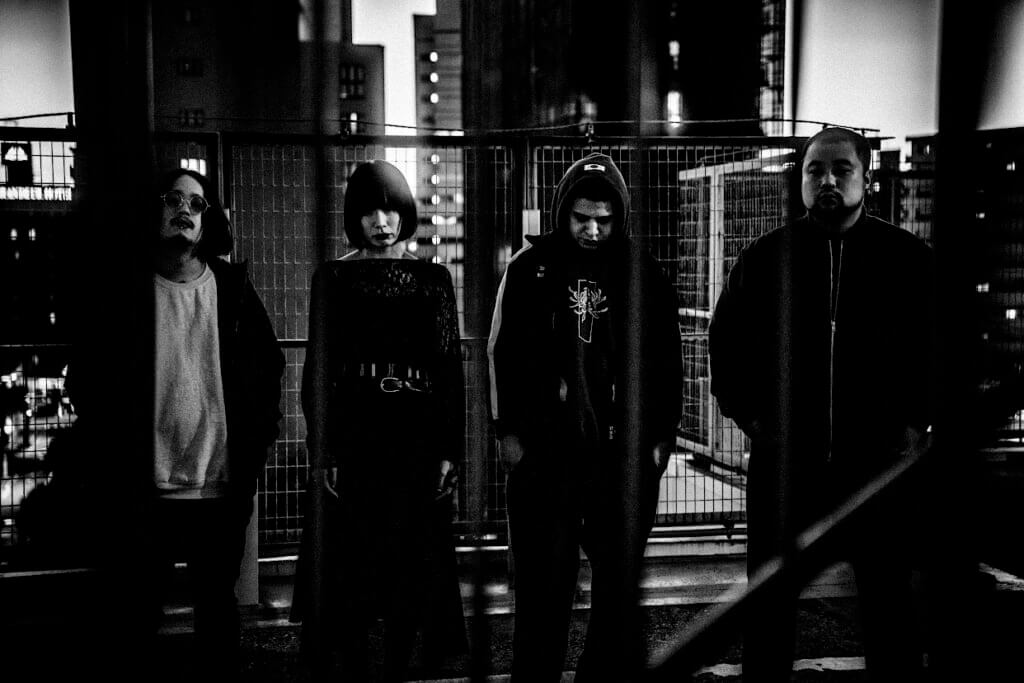
In Europe, kokeshi’s music is often introduced as a fusion of black metal, screamo, shoegaze and horror aesthetics. Do you think that description represents kokeshi accurately, or do you feel it only conveys part of the story?
Adel: Since we create songs influenced by heavy rock and metal, I think that description is accurate.
Also, I grew up listening to Japanese children’s songs and kayōkyoku, so there is also a strong element of turning music rooted in Japanese tradition and popular song into something heavy.
Since your formation in 2017, you have shared the stage with many overseas artists and expanded your activities outside Japan. Have you felt any differences in how kokeshi are received depending on the country, or any reactions that surprised you?
Adel: Japanese audiences tend to watch quietly, holding their breath, so the space becomes extremely tense. Overseas, on the other hand, I get the impression that audiences are excited and enjoy the show in a more open way.
Listeners in Asian countries welcomed us with great respect.
In Europe, there seem to be many bands that deal with horror, spirituality and occult themes like we do, so we are looking forward to it.
If someone discovers kokeshi for the first time at the Madrid show and leaves the venue without remembering song titles or genres, what emotion or impression would you want them to take home with them?
Adel: I want them to feel destruction and purification. Originally, rather than being a group that thinks about musically complex things, we are a band that produces heavy low frequencies in order to release dopamine. I hope we can offer salvation for the soul through an extremely dark sound, ambient guitars and poetry.
Nana: I want people to watch while surrendering themselves to that world without thinking about anything. And I hope that something remains in the hearts of those who see us. That something will continue living inside you, and I think it will awaken the urge to see KOKESHI again.